
Power & Sizing
kVA vs kW vs kWe: Generator Power Ratings Explained
Updated July 30, 2026
Generator spec sheets throw a lot of power units at you — kVA, kW, kWe, kWm — and they are not interchangeable. Getting them confused is the single most common mistake when sizing a generator set. Here is what each one means and how to convert between them.
The four numbers on a spec sheet
- kWm (kilowatts, mechanical) — the raw mechanical power the engine produces at the flywheel. This is the engine's output before it ever reaches the alternator.
- kWe (kilowatts, electrical) — the real electrical power delivered to your load, after alternator and fan losses. This is the number that does actual work: running motors, heaters, and lights.
- kVA (kilovolt-amperes) — the apparent power: the total the alternator must supply, including the reactive portion that motors and transformers draw but don't consume.
- kW (on a genset rating) — almost always means kWe, the electrical output.
The 0.8 power factor
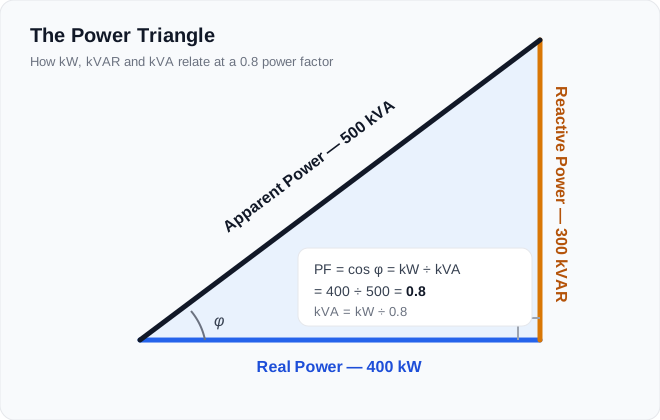
The bridge between kVA and kW is the power factor (PF). For standby and prime generator sets the industry-standard assumption is 0.8:
kW = kVA × 0.8 and kVA = kW ÷ 0.8
So a generator rated 500 kVA delivers 400 kW of real power at 0.8 PF. If you only know the kW figure, multiply by 1.25 to get kVA.
| If the spec sheet says… | …the other number is |
|---|---|
| 100 kVA | 80 kW |
| 250 kVA | 200 kW |
| 1,000 kVA | 800 kW |
| 400 kW | 500 kVA |
Why kWe is lower than kWm
The engine's mechanical output (kWm) is always a bit higher than the electrical output (kWe), because the alternator is not 100% efficient and a belt-driven fan consumes power. A typical generator efficiency is around 94%, so:
kWe ≈ kWm × 0.94
This is why a spec sheet might list an engine at, say, 441 kWm but the genset at 414 kWe — same machine, measured at two different points.
Prime vs standby
Every rating also comes in two duty types:
- Prime (PRP) — unlimited running hours at a variable load. Use this for off-grid or continuous-duty sites.
- Standby (ESP) — emergency backup only, up to ~200 hours/year, no overload. This is the higher figure, and the one that matters for most backup gensets.
Standby is typically about 10% higher than prime for the same engine. (We cover this in depth in the prime-vs-standby guide.)
A worked example
Suppose you need to back up a 320 kW building load:
- Convert to apparent power: 320 kW ÷ 0.8 = 400 kVA minimum.
- Because this is backup duty, you size on the standby rating.
- So you look for a genset with a standby rating of at least 400 kVA (320 kWe) — for example, an engine in the 300–600 kWe range of the catalog.
Turning kVA and kW into a generator package request
After the kVA/kW conversion is clear, the next step is not just choosing the closest engine rating. A complete generator package also needs the duty rating, voltage, frequency, phase, alternator frame, controller, enclosure, fuel type, site conditions and compliance documents to match the real project.
For standard diesel, gas or mobile power packages, review Haifeng Machinery's generator product offerings. For projects that include switchgear, paralleling, containerization, transformers, fuel systems or site integration, review custom EPC power solutions. If you already have a load list, send the kW/kVA target, voltage, frequency, duty type and destination market through Contact Us for package review.
Quick reference
- kVA → kW: × 0.8
- kW → kVA: ÷ 0.8 (× 1.25)
- kWm → kWe: × ~0.94 (alternator + fan losses)
- Standby ≈ prime × 1.10
Once these conversions are second nature, every spec sheet in the engine encyclopedia reads the same way. Next, learn how to size a generator for your load or browse engines by power range.
Related generator guides
How to Size a Generator: A Step-by-Step Guide
How to size a generator for your load: add up running watts, account for the largest motor's starting surge, apply power factor and a spare-capacity margin. Includes an interactive sizing calculator.
Prime vs Standby vs COP vs DCP: Generator Rating Types
The four ISO 8528 generator power ratings — ESP (standby), PRP (prime), COP (continuous) and DCP (data centre) — explained: permitted hours, load type, overload, and which rating to choose.
How to Select a Transfer Switch (ATS): Types, Transitions & Sizing
A practical guide to choosing a generator transfer switch — manual vs automatic, service-entrance and bypass-isolation types, open vs closed transition, NEC load categories, NEMA enclosures and how to size the switch.
Looking for a specific engine?
Browse >1,600 diesel & gas generator engine specs.