
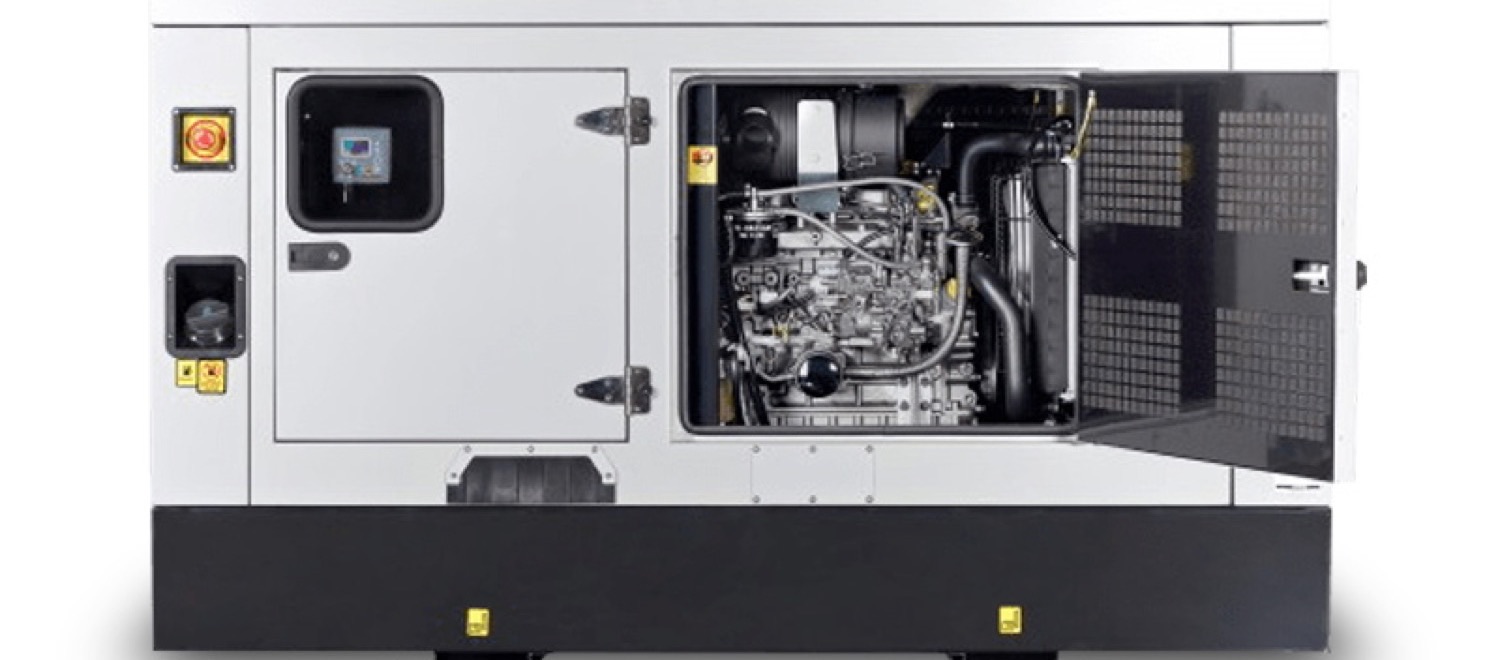
Choosing an Engine
Diesel vs Natural Gas Generators: Total Cost of Ownership
Updated June 27, 2026
The headline price of a generator is only the start. Over a 20- or 25-year life, fuel, maintenance, testing and reliability costs often dwarf the purchase price — and that is where diesel and natural gas gensets diverge. This guide breaks total cost of ownership (TCO) into its real drivers so you can compare the two fuels on the whole picture, not just the sticker.
The short version: diesel usually wins on up-front cost above ~150 kW, while natural gas tends to win on fuel, maintenance and fuel security over a long horizon. The longer your analysis period, the more natural gas closes — and often overturns — the gap.
Capital cost: the 150 kW crossover
Below roughly 150 kW, both fuels typically use automotive-derived engines, and natural gas units cost about the same as — or a little less than — diesel. Above 150 kW the picture flips: gas engines in that range are more specialised and less power-dense, so a natural gas set can cost meaningfully more than the equivalent diesel (industry estimates often put the engine premium well into the tens of percent, with the net project premium smaller once installation and switchgear are included).
One factor narrows that gap: emissions aftertreatment. A diesel set certified to EPA Tier 4 Final or EU Stage V generally needs selective catalytic reduction (SCR) and a particulate filter, which add substantially to the diesel's price — narrowing the capital-cost advantage versus a catalyst-equipped gas engine. (See Tier 4 Final vs Stage V.)
Installation cost
Installation is broadly similar for both fuels — driven mostly by current, cable distance and switchgear rather than the engine. The one extra for natural gas is fuel piping: a gas supply, regulators and isolation valves must be run to the set, and the available gas pressure and capacity confirmed. Diesel, conversely, needs an on-site fuel tank sized for the required runtime, which grows with extended-runtime requirements.
Fuel cost
Per unit of energy delivered, diesel is typically several times more expensive than natural gas, and the gap tends to persist over time. Diesel also has to be prepaid — the tank is filled at commissioning and refilled as it is used — whereas pipeline gas is metered and billed only as consumed. For sets that run many hours (prime power, demand response, extended outages), fuel becomes the dominant line in the TCO, which is where gas pulls ahead.
Fuel security and reliability
This is often the deciding factor, and it cuts both ways:
- Natural gas is pipeline-delivered, so there is no on-site storage to manage, it does not degrade, and it does not depend on a fuel-delivery truck arriving during an emergency.
- Diesel gives you a known quantity of fuel on site, independent of any utility — valuable where the gas network is unreliable or absent. But stored diesel has failure modes: depletion, water ingress, microbial growth, gelling in cold weather and long-term instability. It must be tested and "polished" periodically (commonly every one to four years) to stay reliable.
Which matters more depends entirely on your site and risk profile.
Maintenance and load banking
Both fuels need routine annual service (oil, filters, batteries, hoses, coolant). Two differences favour gas:
- Fuel maintenance: diesel's fuel testing and polishing is an ongoing cost gas sets don't carry.
- Wet stacking: diesel engines run lightly loaded build up unburnt fuel in the exhaust, so they need more frequent load-bank testing to clear it. Natural gas engines don't wet-stack (though they still get periodic health/cooling checks).
Emissions
Natural gas engines, with their three-way catalysts, emit less NOx and CO and effectively no measurable particulate matter, where diesel produces the visible particulates that drive Tier 4 / Stage V aftertreatment. Emissions rarely appear as a hard dollar in a TCO model, but they increasingly carry weight as a soft cost in corporate environmental and permitting decisions.
The analysis period changes the answer
Because diesel is cheaper to buy (above 150 kW) but more expensive to fuel and maintain, the time horizon decides the winner:
- A short 5–7 year view tends to favour diesel — the capital advantage hasn't been eroded yet.
- A long 20–25 year view tends to favour natural gas — fuel savings, lighter fuel maintenance and reduced testing accumulate.
Since most standby gensets live for decades, the long view is usually the honest one.
Bottom line
- Choose diesel when up-front cost dominates, the gas network is weak or absent, or you need guaranteed on-site fuel.
- Choose natural gas when you take a long ownership view, run many hours, value freedom from fuel storage and refueling, or weight emissions heavily.
To shop real options, browse diesel generator engines and natural gas generator engines, or start with the full how to choose a generator engine walkthrough. Haifeng Machinery builds complete sets on both fuels — see their gas power packages (50/60 Hz) and diesel power packages.
Frequently asked questions
Are natural gas generators cheaper than diesel?
It depends on size and time horizon. Below ~150 kW, natural gas sets cost about the same or less to buy. Above 150 kW they usually cost more up front, but lower fuel and maintenance costs mean they often win on total cost of ownership over a 20–25 year life.
Why is diesel more expensive to run than natural gas?
Diesel typically costs several times more per unit of energy than pipeline natural gas, must be prepaid and stored, and carries extra costs for fuel testing/polishing and more frequent load-bank testing to prevent wet stacking.
What is wet stacking?
Wet stacking is a build-up of unburnt fuel in a diesel engine's exhaust when it runs at light load for long periods. It's cleared with periodic load-bank testing — a cost diesel sets carry that natural gas engines do not.
Which fuel is more reliable for backup power?
Both can be highly reliable. Natural gas avoids on-site storage and doesn't degrade, but depends on the gas network; diesel guarantees on-site fuel independent of utilities but must be maintained against contamination, gelling and aging. The right choice depends on your site's gas availability and risk tolerance.
Related generator guides
How to Choose a Generator Engine: Fuel, Power, Frequency & Emissions
A practical buyer's guide to choosing the right generator-set engine — how to weigh fuel type, power rating, frequency, emissions standard, cooling and configuration, with example picks for each size class.
Gasoline vs Diesel vs Natural Gas Generator Engines
Compare gasoline, diesel and natural gas generator engines — power range, efficiency, fuel cost, emissions, durability and best use — so you can pick the right fuel for your application.
Diesel Generator EPA Emission Standards Explained
EPA diesel backup generator standards explained for standby and prime power buyers, including Tier 2, Tier 3, Tier 4 Final, emergency standby rules, and quote inputs.
Looking for a specific engine?
Browse >1,600 diesel & gas generator engine specs.