
Choosing an Engine
Diesel Generator EPA Emission Standards Explained
Updated June 7, 2026
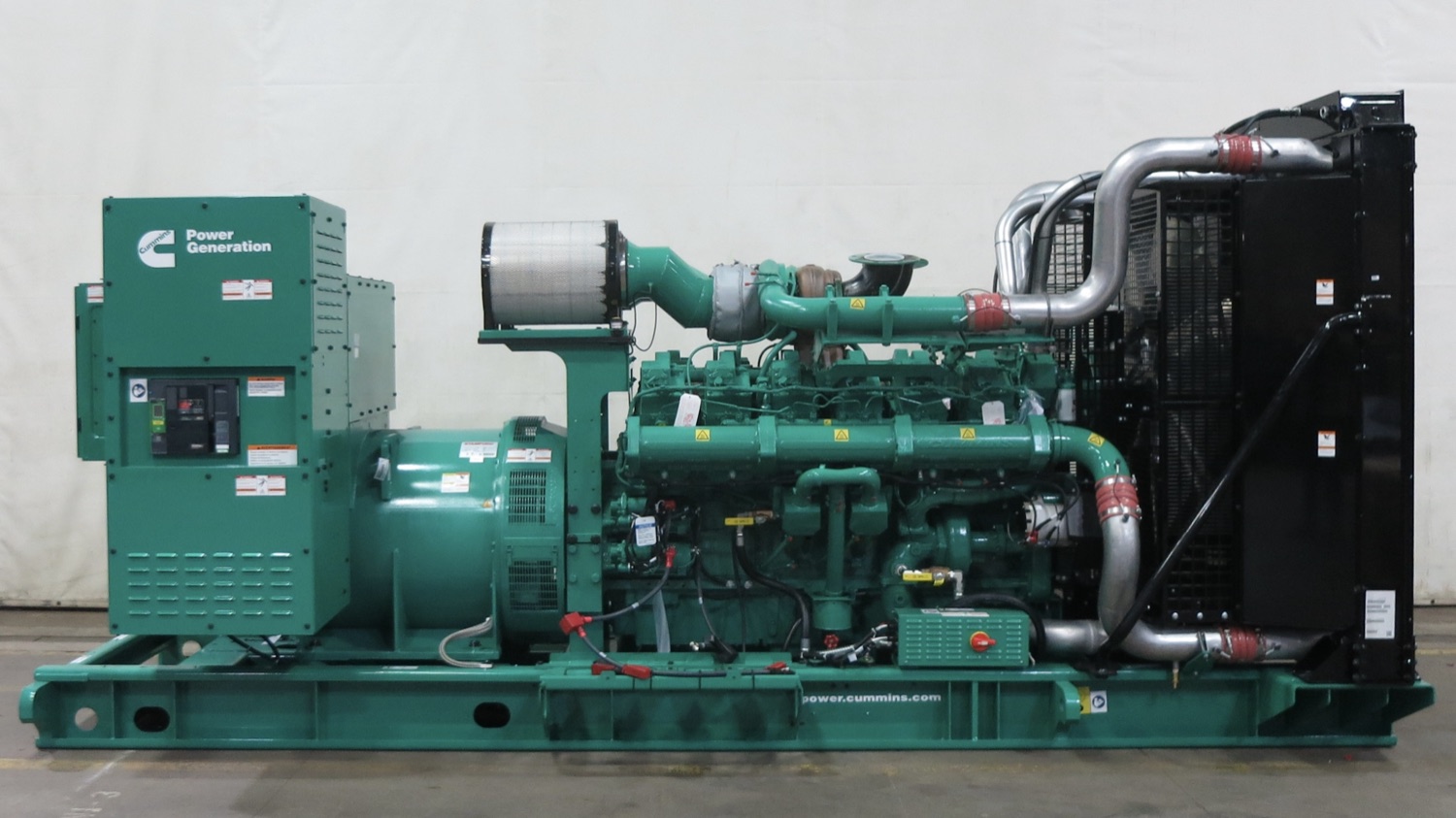
If you're buying a diesel generator in the United States, "what Tier is it?" is one of the first questions to settle. The EPA's Tier system sets how much pollution a diesel engine may emit, and which tier your engine must meet depends on its size and how it's used. For backup power buyers, the key question is whether the engine is truly emergency standby or whether it will run as prime, continuous, rental or demand-response power.
The short version: EPA Tiers tightened diesel emissions in steps from Tier 1 (1996) to Tier 4 Final (2014–2015), cutting pollutants by more than 90%. New prime/continuous engines generally require Tier 4 Final technology with exhaust aftertreatment, while properly classified emergency standby generator engines may use less complex Tier 2 or Tier 3 paths depending on power band, certification and project requirements.
What the Tier system is
Under the Clean Air Act, the EPA regulates exhaust from non-road and stationary diesel engines — the category generator sets fall into. Rather than demand everything at once, the EPA introduced progressively stricter "Tiers," giving manufacturers time to develop the technology. Each tier caps the grams per kWh of regulated pollutants:
- NOx — nitrogen oxides (smog, acid rain)
- PM — particulate matter (soot)
- HC / NMHC — hydrocarbons
- CO — carbon monoxide
The tier timeline
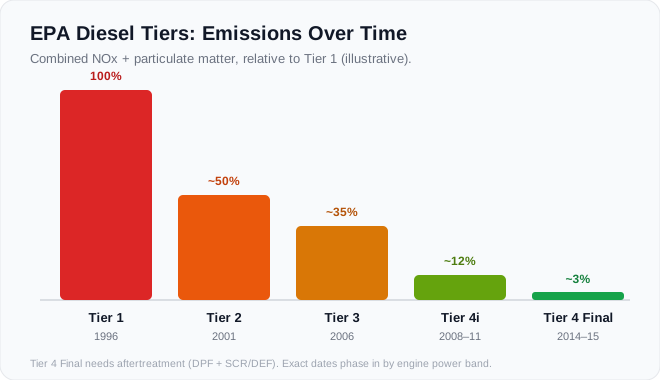
- Tier 1 (1996–2000) — the first non-road diesel standards, phased in by engine size.
- Tier 2 (2001–2006) — tighter NOx and PM limits across all power bands.
- Tier 3 (2006–2008) — further NOx/HC cuts, achieved mostly through engine design (no aftertreatment yet).
- Tier 4 Interim (2008–2011) — a large step down in PM, introducing the first aftertreatment.
- Tier 4 Final (2014–2015) — today's standard: near-zero NOx and PM, only achievable with exhaust aftertreatment.
Exact dates phase in by power band (e.g. under 19 kW, 19–56 kW, 56–130 kW, 130–560 kW, and above 560 kW), so two engines of different sizes reached Tier 4 in different years.
What Tier 4 Final requires
Hitting Tier 4 Final takes more than a better engine — it needs exhaust aftertreatment and clean fuel:
- DPF — Diesel Particulate Filter: traps soot (PM), cutting it by over 90%.
- SCR — Selective Catalytic Reduction: injects DEF (diesel exhaust fluid / urea) to convert NOx into nitrogen and water.
- DOC — Diesel Oxidation Catalyst: reduces CO and hydrocarbons.
- EGR — Exhaust Gas Recirculation: lowers combustion temperature to cut NOx at the source.
- ULSD — Ultra-Low Sulfur Diesel (15 ppm) is required, because sulfur poisons the catalysts.
These systems add cost, complexity and maintenance (DEF top-ups, filter regeneration), which is exactly why the standby exemption matters.
The emergency-standby exemption
This is the most important practical distinction. Emergency standby generators — the kind that only run during a genuine utility outage — are not held to Tier 4 Final. They can be certified to the less-stringent Tier 2 or Tier 3, on the logic that they run very few hours per year.
The trade-off is an operating limit: an emergency engine may run roughly 100 hours per year for maintenance, testing and required readiness, with no hour limit during an actual emergency. Run it as a prime/continuous source beyond that and it must meet the full prime-power standard.
(For the difference between standby and prime duty, see prime vs standby vs COP vs DCP.)
What EPA Emergency Standby Means
An EPA emergency standby diesel generator is normally specified for backup operation when the utility source fails or when emergency operation is required. It is not selected for routine production power, peak shaving, rental duty, or continuous site power. That distinction affects the engine certification path, aftertreatment expectations, allowable non-emergency operating hours, project documentation and maintenance planning.
For a buyer, the important practical step is to describe the duty honestly before requesting a quote. A hospital backup set, telecom standby set, commercial building emergency generator, municipal backup unit and data-center standby generator may all be standby applications. A mine running every day, a temporary construction generator, or a generator used to offset utility costs is a different application and may need a different emissions path.
EPA Tier 2, Tier 3, And Tier 4 Final Engine References
Use the database filters below to compare engine families before selecting a generator package:
- EPA Tier 4 Final engines are the starting point for projects that need the strictest current non-road diesel emissions technology.
- EPA Tier 3 engines are often relevant for standby diesel generator discussions where the application and market allow them.
- EPA Tier 2 engines are commonly reviewed for emergency standby packages and legacy regulated-market projects.
The engine tier alone is not enough to quote a generator set. Buyers should also compare prime and standby ratings, 50 Hz or 60 Hz output, voltage, alternator frame, radiator configuration, enclosure space, aftertreatment clearance and the documentation required by the destination market.
Standby Vs Prime Operation
Standby and prime operation should be decided before engine selection. Standby means the generator supports critical loads when the normal power source is unavailable. Prime means the generator is expected to carry variable site load for regular operation. Continuous duty is more demanding again and usually requires a different sizing and maintenance discussion.
This matters because an engine that fits emergency standby paperwork may be wrong for a project that will operate every day. It can also create problems during commissioning, inspection or later service if the actual duty is different from the stated duty. When in doubt, prepare a load list and expected operating-hour profile before comparing EPA diesel generator options.
Information Buyers Should Confirm Before Quoting
Before final generator selection, confirm:
- Required standby or prime kW/kVA.
- Voltage, phase and frequency.
- Destination country or state.
- Emergency standby, prime, continuous, rental or temporary duty.
- Expected annual operating hours outside real emergencies.
- Starting loads, motor loads and load-step requirements.
- Enclosure, sound, fuel tank, transfer switch, breaker and control scope.
- Ambient temperature, altitude, site access and maintenance space.
- Required certificates, emissions documents, test records and shipping documents.
Haifeng can use this information to review EPA emergency standby diesel generator packages and compare whether a standard package, general product offering or project-specific configuration is the better starting point.
Use The Engine Database Before Final Generator Selection
The Generator Engine Encyclopedia is a screening tool, not a substitute for final compliance review. Use it to compare generator-drive engine models, emissions tags, power bands, datasheets and 50/60 Hz ratings before choosing the complete package. Then confirm the package-level requirements with the generator supplier, including alternator, controller, enclosure, fuel system, documentation and destination-market rules.
If the project is ready for quotation, send the load list, duty type, required kW/kVA, voltage, frequency, destination market and emissions requirement through Haifeng Machinery contact.
Which tier do you need?
- Prime / continuous power (runs regularly) → Tier 4 Final. Required, with aftertreatment.
- Emergency standby only → Tier 2 or Tier 3 is acceptable and far simpler.
- Used / pre-owned → a well-maintained Tier 2 standby unit can still be a sound choice for backup duty.
Match the tier to the application, not the other way around — buying full Tier 4 for a generator that runs ten hours a year adds cost and upkeep you may not need.
Beyond the US: Stage and China standards
Outside the US, the equivalents are the EU's Stage standards (Stage IIIA, IIIB, IV, and the current Stage V) and China's non-road stages. They track the EPA tiers closely. There's no EPA "Tier 5" yet, though California's CARB is studying one. In this catalogue you'll see engines tagged with their standard — for example U.S. EPA Tier 3, Euro Stage V, or Unregulated for export markets without an emissions requirement.
Next steps
Decide your duty rating and size first, then browse the catalogue — most engine spec pages list the emission standard alongside the power ratings. For a complete regulated backup power package, review Haifeng's EPA emergency standby diesel generators.
Related generator guides
How to Choose a Generator Engine: Fuel, Power, Frequency & Emissions
A practical buyer's guide to choosing the right generator-set engine — how to weigh fuel type, power rating, frequency, emissions standard, cooling and configuration, with example picks for each size class.
Gasoline vs Diesel vs Natural Gas Generator Engines
Compare gasoline, diesel and natural gas generator engines — power range, efficiency, fuel cost, emissions, durability and best use — so you can pick the right fuel for your application.
Air-Cooled vs Water-Cooled Engines: Pros, Cons & Lifespan
How air-cooled and water-cooled (liquid-cooled) generator engines differ — how each sheds heat, their pros and cons, durability and lifespan, and which to choose for your application.
Looking for a specific engine?
Browse >1,600 diesel & gas generator engine specs.