
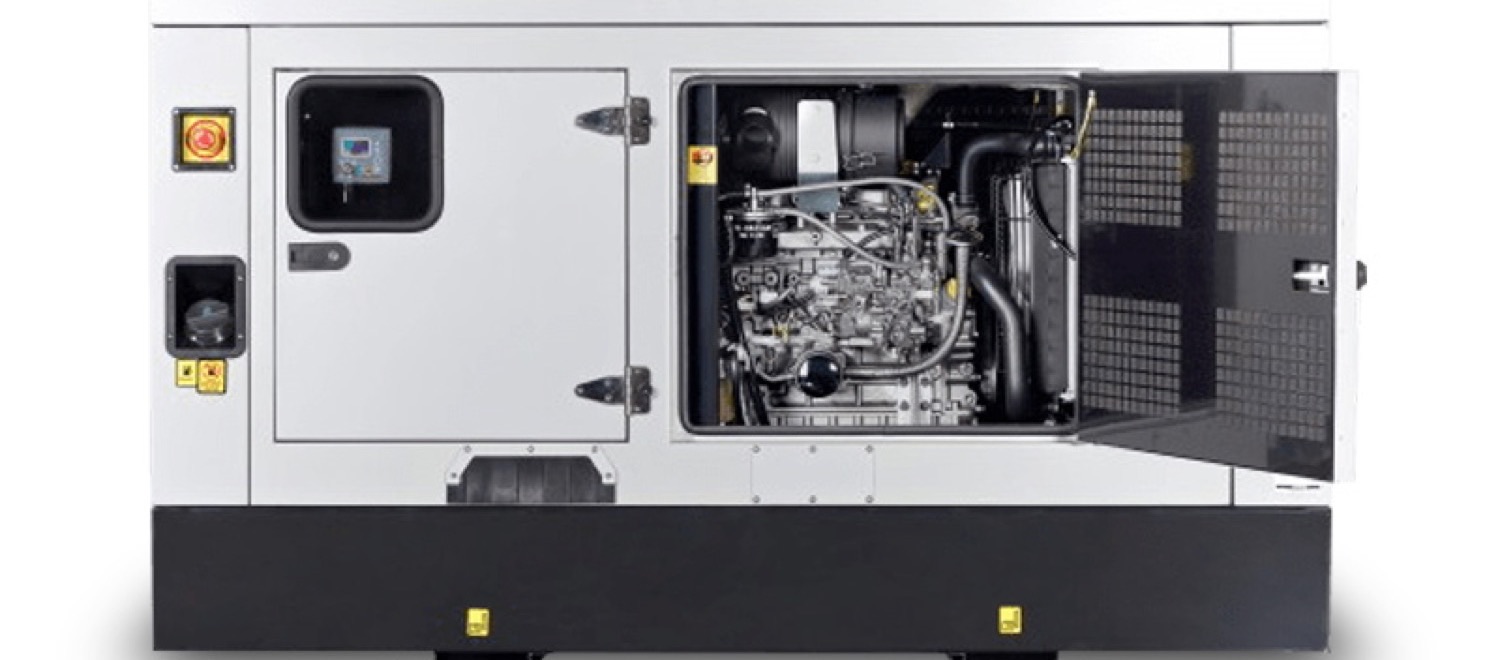
Choosing an Engine
How to Choose a Generator Engine: Fuel, Power, Frequency & Emissions
Updated June 27, 2026
Choosing a generator engine is a process of elimination. Start from the job the genset has to do, and each decision — fuel, power, frequency, emissions — narrows the field until only a handful of suitable engines remain. This guide walks the decisions in the order that matters, and links to the full lists so you can see real options at every step.
The short version: size the load first, pick the fuel, set the power rating (prime vs standby), match the frequency to your grid, then filter by the emissions standard your region enforces.
1. Start with the load, not the engine
Every other choice depends on how much power you actually need. Add up the running load of everything the generator must supply, allow for the starting surge of motors, and add headroom. Our step-by-step sizing guide covers this in detail, and the calculator below gives a quick estimate.
Generator Sizing Calculator
Estimate the generator rating your loads need. Guidance only — confirm with an engineer.
Recommended (prime)
290 kW
Apparent power
363 kVA
Once you have a target kW (or kVA), you can shop by power range instead of guessing at models.
2. Pick the fuel: diesel or gas
Fuel is the first real fork, because it sets the practical size range and the running economics.
- Diesel engines are the workhorse — efficient, durable and available from a few kW to several megawatts. They dominate standby and prime power where fuel is stored on site.
- Gas engines (natural gas, biogas, CNG/LNG) deliver lower-emission, lower-cost power for continuous and CHP duty wherever a gas supply is available.
For the full trade-off — cost, emissions, durability and lifespan — see Gasoline vs Diesel vs Natural Gas.
3. Set the power rating: prime vs standby
The same engine carries different numbers depending on duty. A standby (ESP) rating is for emergency backup with limited annual hours; a prime (PRP) rating is for continuous variable-load running and is roughly 10% lower. Don't compare a standby figure on one engine against a prime figure on another — see Prime vs Standby vs COP vs DCP, and remember kVA vs kW when reading the spec sheet.
Browse by size class:
- Under 100 kWe — small commercial and residential backup
- 100–500 kWe — the most common commercial band
- 500–1,500 kWe — large standby and prime
- 1,500+ kWe — data centres, utilities, marine and CHP
4. Match the frequency: 50 Hz or 60 Hz
Frequency is set by where the genset will run: 50 Hz (1,500 rpm) across most of Europe, Asia, Africa and Australia; 60 Hz (1,800 rpm) across North America and parts of South America and Asia. Many engines are rated for both — see Alternator Voltage & Frequency: 50 Hz vs 60 Hz and browse by rated speed.
5. Filter by the emissions standard for your region
Where the genset is sold and operated decides which emissions regime applies:
- U.S. EPA Tier 4 Final for North America (see EPA standards explained)
- EU Stage V for Europe — stricter, with a particle-number limit (see Tier 4 Final vs Stage V)
- Less-regulated markets where unregulated or earlier-tier engines remain available
Emissions class often dictates aftertreatment, footprint and cost, so confirm it early.
6. Cooling and configuration
Most generator engines above a few kW are liquid-cooled; small portable sets may be air-cooled (air-cooled vs water-cooled). Cylinder layout — inline for smaller engines, V-configuration for large high-output units — follows from the power you need rather than being a choice in itself.
Example picks by size class
To make it concrete, here are representative engines across the range (each links to full specs and the manufacturer datasheet):
- ~250 kVA diesel: Ashok Leyland AL8NTIDG6 — a 7.98 L inline-6 standby engine
- Mid-range diesel: Cummins K50N-G12H and Volvo Penta TAD1344GE-B
- Large natural-gas: Cummins HSK78G — a 78 L V12 producing ~2,500 kVA
- Megawatt-class gas: Wärtsilä 20V34SG — a 20-cylinder medium-speed engine for utility-scale power
Frequently asked questions
What is the most important factor when choosing a generator engine?
The load it must power. Sizing the running and starting load first determines the power class, and every other choice — fuel, frequency, emissions — narrows the field from there.
Should I choose a diesel or gas generator engine?
Choose diesel for backup and prime power across the widest range of sizes with on-site fuel storage; choose gas for continuous, lower-emission or CHP duty where a gas supply is available.
How much bigger than my load should the engine be?
Size to the continuous running load plus the largest motor's starting surge, then add headroom (commonly 10–25%). Standby ratings already assume limited annual hours, so match the rating type to your duty.
Does the engine need to match my country's frequency?
Yes. Use a 50 Hz (1,500 rpm) rating for 50 Hz grids and 60 Hz (1,800 rpm) for 60 Hz grids. Many engines publish both ratings, but the genset must be configured for the local frequency.
Related generator guides
Gasoline vs Diesel vs Natural Gas Generator Engines
Compare gasoline, diesel and natural gas generator engines — power range, efficiency, fuel cost, emissions, durability and best use — so you can pick the right fuel for your application.
Diesel Generator EPA Emission Standards Explained
EPA diesel backup generator standards explained for standby and prime power buyers, including Tier 2, Tier 3, Tier 4 Final, emergency standby rules, and quote inputs.
Air-Cooled vs Water-Cooled Engines: Pros, Cons & Lifespan
How air-cooled and water-cooled (liquid-cooled) generator engines differ — how each sheds heat, their pros and cons, durability and lifespan, and which to choose for your application.
Looking for a specific engine?
Browse >1,600 diesel & gas generator engine specs.